


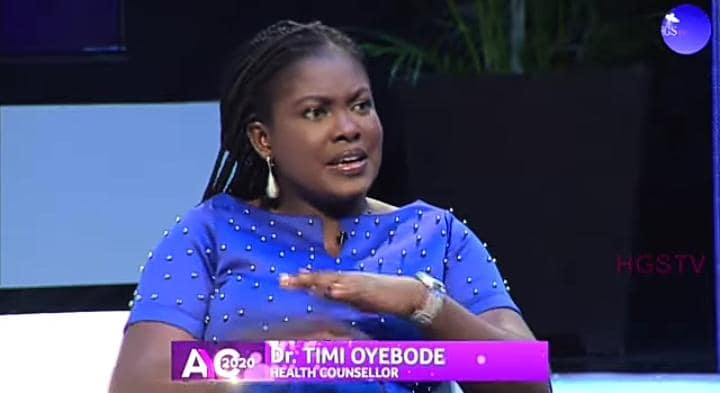
“Over the years sadly, mental health issues have been misunderstood, mismanaged and misrepresented by the Church. Some people go on and say it is madness. Some people go on and say it is a demonic possession. Yes, it’s a lot of things, we do agree however there are professionals whose job is to help people through recovery” – Dr Timi Oyebode
Statistics prove that 26 percent of young people between the ages of 18 to 35 are struggling with mental health disorders.
Interviewer: What exactly is mental health?
Dr Timi: Mental health is a state of wellness, when you have harmony between the body, spirit and the soul. Once there is harmony within the person and it aligns with the external world around the person then the person is mentally healthy. The same way we have physical health is the same way we have mental health which just implies that the person is okay, fine and stable. This is an opportunity to correct the notion, when you hear mental health, a lot of people get scared or worried. Mental health is totally different from mental sickness.
When we say mental health, it means the person’s state of mind is healthy.
When we say mental illness, we refer to the fact that the person is having mental health challenges just the say way we have it with physical health.
Interviewer: What are mental health issues?
Mr Samuel: We have depression, post traumatic disorder, personality disorder and lots of them. The most prevalent is depression where someone feels, acts constantly down emotionally; a state where things are no longer interesting to you as it used to be. Where you don’t want to go out as you used to go, a lot of the time you are sad and you want to be alone by yourself. Or you are overly excited. It is a flex: either the person is overly excited or overly sad; when you are not who you are supposed to be or what you are supposed to be doing.
They are changes that when we are sensitive enough we can see around people living with us. It’s just that we live in a very busy world, everybody minding their business and we don’t pick them out.
Interviewer: What are categories of mental health issues? The prevalent one that we see is depression.
Dr Timi: Depression is not what many people think it is and it is amazing how the word ‘depression’ rolls out today. A lot of people use it for what it is not. When we are talking about categories, we are talking about specification, diagnosis. At that point, experts and professionals are the only ones who can tell us.
Sometimes when someone says, “I have depression.”
My first question is “who told you that, who diagnosed that, how do you know that?”
You probably went online, you saw some symptoms but that same symptom could represent sadness.
Mr Samuel: There is a difference between being depressed and feeling depressed. There is a difference between feeling suicidal and being suicidal. That person that will take his life won’t let anybody know, it will just happen:
“I saw him yesterday, he was lively and today he has died.”
Compared to when someone tells you, “I want to take my life, this life: I am tired.” At that point, the person needs help, there is a problem somewhere. Probably the person needs to get immediate help.
Dr Timi: Let me put a balance to this because the reality is someone who feels suicidal can actually be suicidal; someone who feels depressed can actually be depressed. My point is that you don’t do self-diagnosis. You don’t allow your situation to define this is how you feel, so this is it.
The reality is that depression is an illness that has symptoms, treatment. Because we are talking mental health, depression is not the only one, anxiety disorder is also there, bipolar, social disorder, eating disorder. A lot of times, many of us don’t know we are exhibiting some of these things.
Once you could sense that there is no coherence between you and what is happening outside. For example, you go out there; you are smiling, happy but when you get back to your house you are sad, crying for no reason, all alone. You know something is not tallying, then in such cases, you need to ask for help, preferably a professional: a psychiatrist, psychologist, psychotherapist and helps you to put it into proper perspective because you might not be depressed.
There are different states of depression. There is the acute, mild…rather than labelling the person or labelling yourself.
The most important thing is to get help and not self-diagnosis.
Interviewer: What are the triggers of Mental Health issues specifically among young adults?
Mr Samuel: Triggers of mental health issues could be health reasons, what you inherited, it could be substance misuse for hard drugs and over time it becomes mentally draining. If it arrived through emotional challenges, if you are verbally abused, physically abused, I will be able to say what can be done and what triggered it. Putting all those things together, they give me a broad spectrum of possibilities of what might have been responsible.
Dr Timi: Signs and Symptoms:
Once you realise majorly that you are persistently unhappy or persistently sad; I remember one of the strategies we usually explain is if you find yourself in a mood…almost all of us have mood changes and sometimes those mood changes can be overwhelming. Once you realise that your mood is constantly beyond an average of 3 days, 5 days, 3 weeks, 4 weeks and you consistently have this gloomy space in you, then it is a sign for you to ask for help. In fact, you don’t have to wait for 4 weeks, once you realise that you are constantly in this downhill and you are going spiral down, then you need to ask for help.
If you realise that you find it difficult to sleep (insomnia) or you sleep too much. Once someone is sleeping consistently, sleeps at every little thing, it could be a sign. Someone who eats too much.
Somebody who suddenly has a change of behaviour: You realise that naturally you are the quiet, reserved person and suddenly you are talkative; something could be wrong.
Isolation: somebody who no longer finds the company of other people interesting, who just wants to be alone.
Someone who begins to dislike things that they take pleasure in before: hobbies are no longer interesting to you. You are finding it difficult to have interest in anything, then at that point you need to ask for help.
One particular symptom that many of us overlook a lot of time is stress. You are getting excessively stressed, you know that you are getting overwhelmed. When people talk to you, you become short fused. Or you start crying at every little thing, those are signs that your emotional tank has been getting drained and that could affect you mentally.
Interviewer: Now we are in a contemporary religious setting, apparently we are in the Redeemed Christian Church of God Annual Youth Convention, most people would find it very easy to be able to speak to their pastors.
How do you find that balance between speaking to your pastor and when to go to a counsellor? Or can your pastor play both roles?
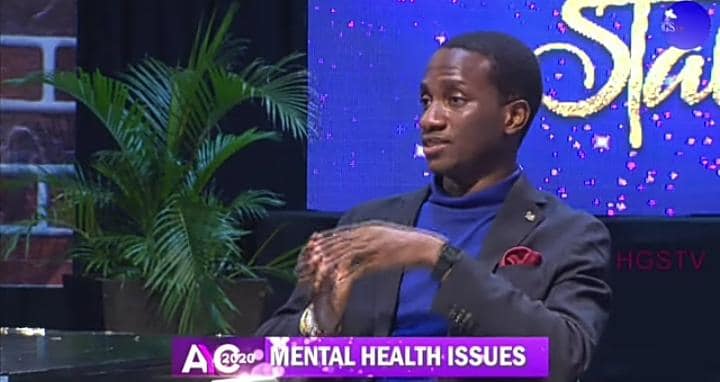
Mr Samuel: I often say that Pastors are not the best listeners because they talk, most of them… I have been able to get the skills, training which has made me move between the two flexes. If I need to listen, I listen. If I need to talk, I talk.
We need our pastors to listen more than they talk when they are not preaching. When you listen, you hear more and you are able to help them. The Church should start rising up to the occasion of having trained counsellors that can do these things and help them. For example, I am Faith based certified counsellor, I’m not just a secular counsellor. These things are Biblical. Proverbs Chapter 4 verse 23 says, “guard your heart with all diligence because out of it flows the issues of life.” God will not guard your heart for you, your pastor will not. It is your responsibility. If you need to speak, speak up, speak to your Pastor. Your Pastor can refer you. The most important thing is to speak up to someone you can trust and has your back. The truth is not every pastor has the back of their members, let’s not sugar coat it.
Dr Timi: Counselling is a profession and is a lot of work. Pastors do a lot of work already. Counselling involves a lot of patience, I tell people if you cannot have a high dose of patience, you can’t be a good counsellor. Because the demand on the Pastor is always high, I will usually recommend that the counsellor is the best person because that is his job, especially the one that is trained.
Putting a balance to it, can pastors be counsellors? Yes, 100 percent.
How? By virtue of training. Most Biblical schools have a module on Pastoral Counselling. Unfortunately, many do not focus. Secondly, the curriculum is not detailed enough.
Counselling is an art, it’s not just by virtue of spiritual position; it’s not just by virtue of age; it’s not just by virtue of position. It is a skill that needs training.
If your pastor is the best option: Once you tell your Pastor whatever it is you are going through and you know deep in your heart you didn’t get the answer you need. Your pastor can only help you to the level of information that he has. If he knows how to pray for you, that is what he can give to you because that is what he is trained to do. If he has given you the Word, that is the key he has, he has not failed.
I love the fact that Churches are now embracing professional counselling, someone who understands the principles and ethics of the work. The pastors can refer them to go there.
I can sit in a place and advise you as a pastor but once we need to go into details then you need to see a professional. Particularly mental health issues. Over the years sadly, mental health issues have been misunderstood, mismanaged and misrepresented by the Church. Some people go on and say it is madness. Some people go on and say it is a demonic possession. Yes, it’s a lot of things, we do agree however there are professionals whose job is to help people through recovery.
Before people have mental health issues or sickness, there are symptoms and if they are well managed, they might not end up with these challenges.
Pastors, once you have stood in your place of giving spiritual support, prayers and the word; once you see these symptoms, ask the person to see a professional. It’s a balance of the three: the spirit, body and soul.
Interviewer: What happens when the Pastor needs to be counselled, what happens when the Pastor has mental health issues?
Dr Timi: That will bring me to the place of stigmatization. The only reason why we say what happens when a Pastor has depression or mental health issues, it’s because of stigmatization. The Pastor is a man like you and me. Any man can have malaria for example, so any man can be sad. The Pastor also can be sad. The Pastor can be overwhelmed, have sleepless nights, stressed and these are what can lead to mental illness.
Anxiety, fear, fear of the future; a lot of things could come together. Once the Pastor is in that state, he should go for help.
Mr Samuel: Let’s stop seeing help as something hard to get or something that is demeaning.
(stop saying): “Those who need help should go, I am fine. God will take care of me.”
The Bible already says that we should look out for each other. That means if you need help, have that boldness to speak up. Know that the person you are speaking to also gets help. At the end of the day, counsellors also get counsel. Pastors should also get counsel and help properly too. Let’s demystify and break this brick wall behind getting help. It sounds like it is for people that are under-privileged or sick that have issues. Everybody needs help one way or the other. The earlier you go after it, the better. At the end of the day, the Bible already says we should do the job ourselves. Guarding your heart means doing all that it takes for your heart to be sane.
Just like Jesus, at some point He wept because his friend died. After He wept, his emotions cleared, His head was clear, He had released it and could say, “Lazarus come forth.” He couldn’t have done that while He was in grief, He had to clear the way first. When He knew He needed help, He first cried. After the crying, He had to call forth the miracle.
It’s when you are refreshed, renewed that you are like an eagle that is waiting upon the Lord, that’s when you can achieve much more.

Interviewer: The World Health Organization said we should look for adaptability measures as regards to COVID-19 pandemic. Not neglecting the fact that a lot of people, young people especially have been faced with depression. As a matter of fact, the statistics is rising. How do we manage the increase in the rate of depression issues considering the fact that we are speaking to youth and young adults. Just like you rightly said, there is a need to understand depression, if it is just a feeling or if it is really depression.
Dr Timi: This pandemic has brought a lot of isolation; isolation or loneliness is one of the strong triggers into mental health issues where the person starts thinking I’m all alone, I don’t know what the future holds. In fact, I call this pandemic ‘COVID Phobia’. A lot of people are anxious about the future, they don’t know what tomorrow holds. A lot of people are confused, school has stopped for many, they don’t know where to start from again. A lot of things are messed up already.
We need to be deliberate, take it all in and say to yourself:
“What happens in the next 5 years?”
“Where will you be in the next 10 years?”
Once you can become deliberate to look beyond now…once you can take yourself from 2020 and see 2021, 2029, you are getting out of that space.
1. Deliberate futuristic saying
2. Dance therapy: Dance is as effective as you can imagine. Once your body starts moving in a way that it is aligned to your core, your mind becomes relaxed even though everything around you is not okay right now but the mind begins to believe that everything will be okay.
3. As a Christian, you will want to go for positive confessions: Go into the scriptures, pick the Word. Everything happening now has been recorded years ago. It’s been recorded that some people will see the end, you need to tap into that and begin to confess those words to yourself. Use scriptures, use positive words and stand in that place.
4. Talk to somebody: COVID-19 has put a bridge in between many of us; no social gathering, a lot of spaces in between one another, so that human need for connection has been reduced and that is where the challenge is. You need to bridge that gap, you need to become deliberate to reach out to people. Don’t wait for them to reach out to you.
Don’t say, “they didn’t call so I’m not going to call them.” If you do that, remember they might also be challenged at their end and they might be waiting for you to reach out. Be deliberate.
Call your friends, call your family, the person who had offended you. Be deliberate to bridge that social gap. Once you are able to do that consistently, you’ll start feeling much better.
Mr Samuel: Something very key, since Nigeria is just embracing professional counselling and we don’t have so many people around, if you have someone around you that is going through a phase or the other, link them up to a counsellor. We need to look out for ourselves because at the end of the day, we are our brother’s keeper even if that person does not want to talk. Be that link to get help for that person.
If everybody looks out for each other, I’m sure those people that have died won’t have died if they had their siblings, neighbours, friends that realised they have not seen them, they’ve not been around, they’ve been locked indoors. If we deliberately look out for ourselves and connect with each other, we will be able to give help. Let’s always do that. Call that church member, pastor, minister, friend, colleague and get help.
Dr Timi Oyebode is the Health Counsellor at Attitude Development International with about 16 years of experience in counselling
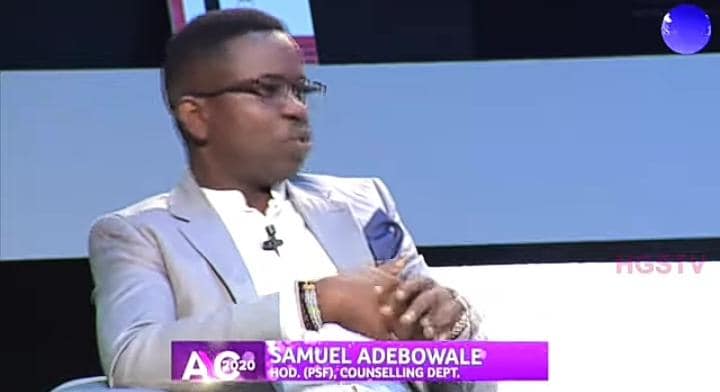
Mr Samuel Adebowale is Head, Counselling Department, Pastors Seed Family with counselling experience of about 9 years
Source: RCCG Youth Convention 2020 (Day 2)
